Atlasic
VSCode extension that maps a codebase into an interactive atlas of its dependencies, with heatmaps, search and AI-assisted diff review. nwHacks 2026 finalist
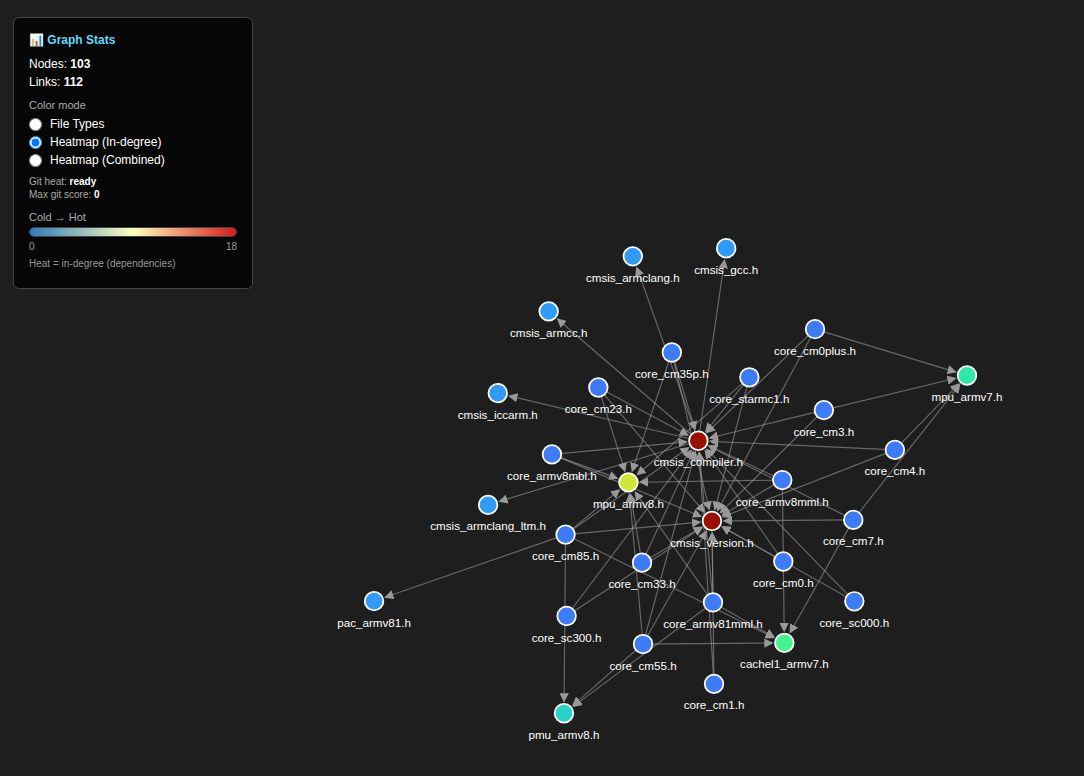
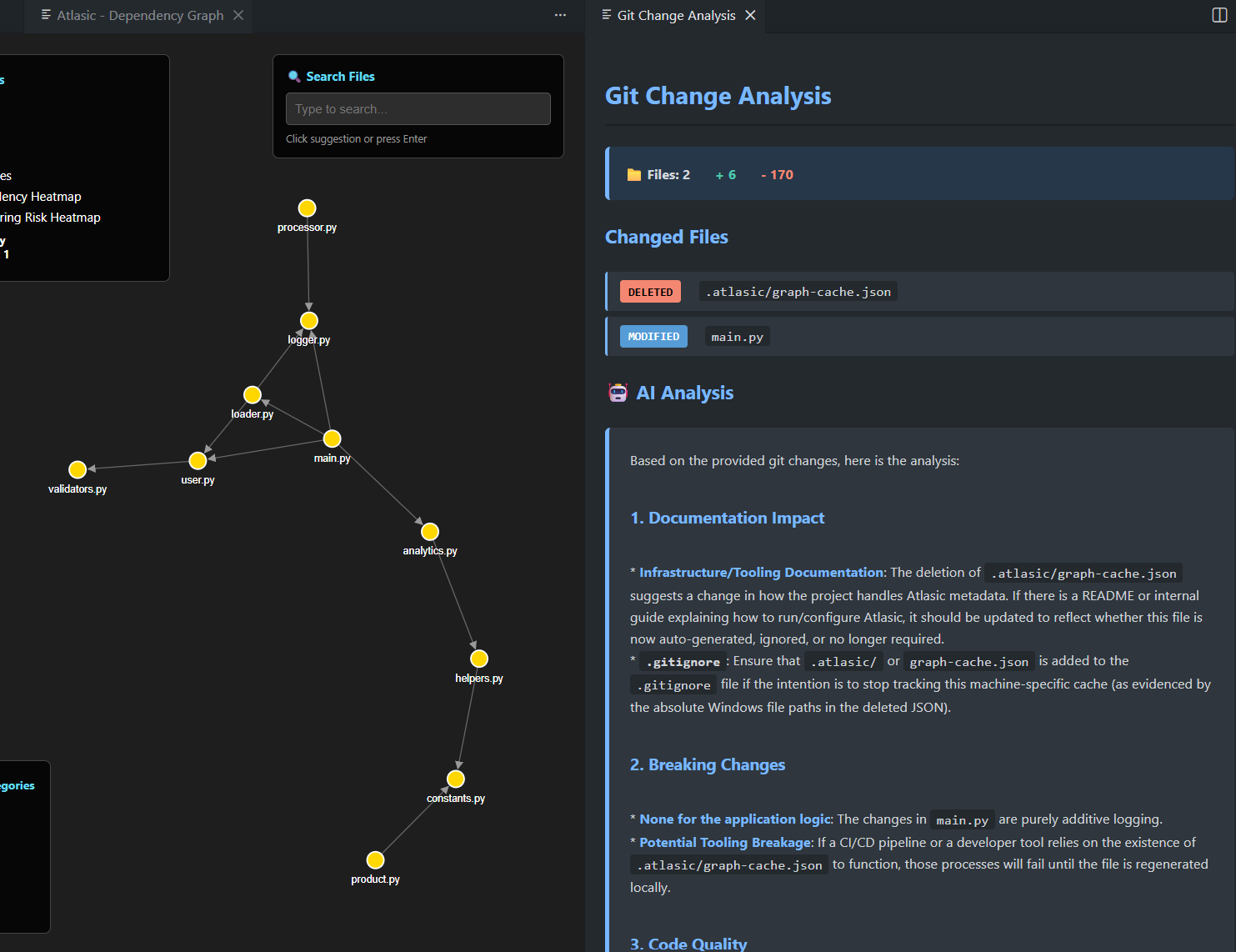
Atlasic is a VS Code extension that turns a codebase into an interactive atlas of its dependencies. One click maps every file and import into a graph you can pan, search and colour by how heavily each file is depended on, with Gemini-powered help for reviewing diffs and debugging from ticket context. I built it with my friend Diego Armstrong at nwHacks 2026, where it was a finalist, and it is published on the VS Code Marketplace.
Getting oriented in an unfamiliar codebase takes far longer than it should, whether you're building your first feature at a new job, looking for what to refactor, or explaining a change to your team. Code and documentation are walls of text, but most people understand structure faster when they can see it.
The extension scans the workspace with include/exclude rules and builds an in-memory graph: files and modules are nodes, and dependencies parsed with regex are edges. The graph is serialized to JSON and sent over VS Code's postMessage bridge to a Webview, where a TypeScript renderer lays it out and handles zoom, pan, search and highlighting without blocking the extension host. The extension stays the controller, pushing fresh snapshots when the repo or settings change. When very large repos slowed graph generation down, we rewrote the file-discovery step in Rust as a Node.js addon with NAPI-RS, which made it noticeably faster.
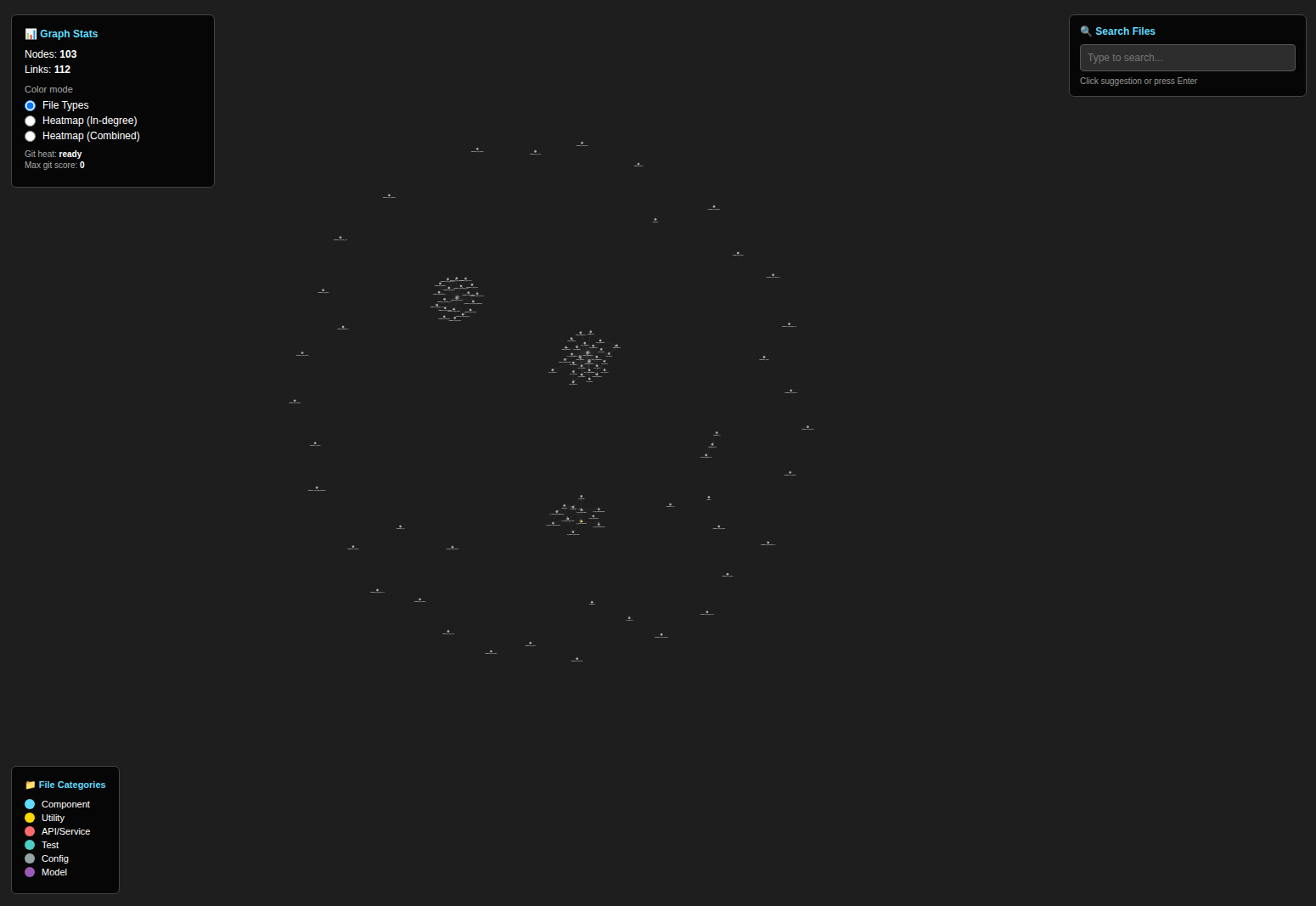
We tested Atlasic on large real-world codebases, including VS Code itself and the Linux kernel, and published it to the Marketplace, where it has passed 40 downloads. Next is moving more of the heavy work into Rust, and adding ticket-aware context and adjustable "context layers" so the map can be as detailed or as abstract as you need.